
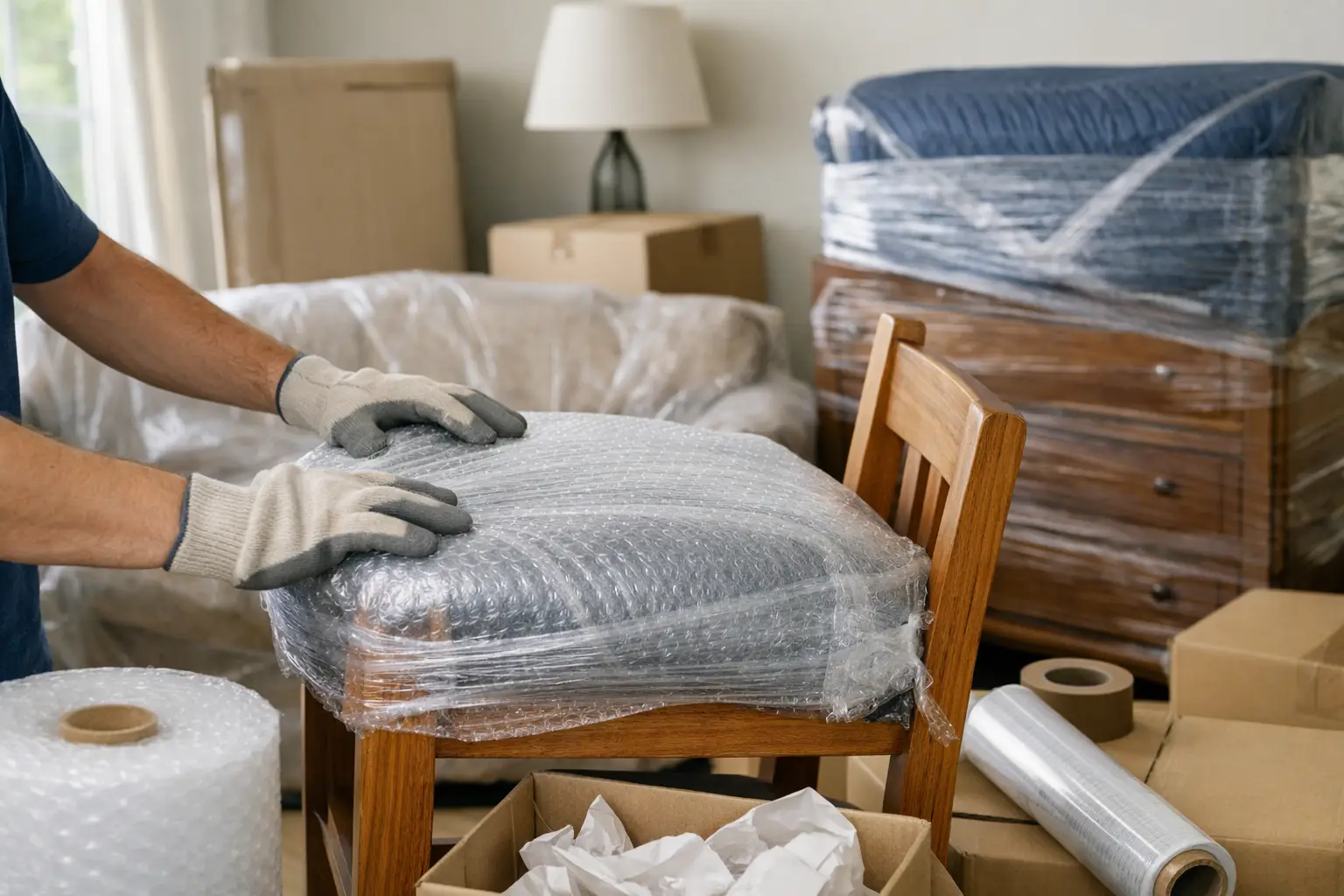
Most damage during a move doesn’t occur on the removal truck. It happens beforehand, when an item is poorly prepared, hastily protected or transported loosely among other boxes. If you’re researching how to pack furniture for a move, the main point is simple: protect well before lifting, loading or stacking any item.
Large, heavy or delicate furniture requires more than a blanket on top. Each material reacts differently to transport. Wood scratches. Glass breaks. Fabric absorbs dirt. Lacquered surfaces mark easily. When packing is done methodically, the move is faster, safer and with fewer surprises at the destination.
What to prepare before packing furniture
Before wrapping any item, it’s worth doing a quick sort. See what will actually go to the new address, what can be disassembled and what needs reinforced protection. Packing furniture without this step usually creates unnecessary volume and increases the risk of damage.
Start by cleaning surfaces. Dust, fine sand and debris can scratch finishes when trapped between the furniture and protective material. It’s also important to measure doors, corridors, lifts and stairways, especially in apartments and offices. Some furniture seems simple to move but gets stuck on the way out and ends up damaged for lack of planning.
Next, gather the right materials. Stretch wrap helps keep doors and drawers closed. Moving blankets absorb impact. Corrugated cardboard protects corners and flat faces. Bubble wrap is useful for fragile parts, but it shouldn’t always touch sensitive finishes directly for long periods. Packing tape should secure the protection, never stick directly to the furniture’s finish.
How to pack furniture for a move safely
The logic is always the same: reduce movement, protect edges and avoid direct pressure on fragile parts. But the execution changes depending on the piece.
For sofas and armchairs, remove loose cushions, protect the legs and use clean covers or blankets to prevent dust and marks. If the sofa is light-coloured fabric, the outer protection must be well sealed. If it’s leather, take extra care to avoid abrasion and creasing caused by excessive tightening.
For dining tables, desks and sideboards, it’s ideal to remove legs whenever possible. This reduces weight, improves manoeuvring through access points and lowers the risk of twisting. Glass tabletops should be removed, packed vertically and never transported flat between heavy items. Wood or stone tops require full protection around the edges, because that’s where impacts usually occur.
Beds, wardrobes and large bookcases almost always benefit from disassembly. It’s not just a matter of space. Bulky furniture experiences more strain when carried whole, especially on stairs or through narrow passages. When disassembling, put screws, dowels and fittings into labelled bags and attach those bags to the corresponding frame without sticking them directly to the finish.
Chairs are often treated as simple pieces, but they also need attention. If they have arms, thin legs or delicate upholstery, each unit should be protected and positioned without excessive weight on top. Stacking can work, but it depends on the model and the strength of the frame.
When to disassemble and when to leave assembled
Disassembly isn’t always the best option. Some pieces lose stability when repeatedly taken apart, especially older furniture, low-density MDF models or items with worn fittings. In those cases, forcing disassembly can cause more damage than transporting them assembled.
On the other hand, large furniture with solid structure and a reliable assembly system usually travel better in parts. This applies to beds, large tables, workstations and tall cabinets. The criterion should be practical: if disassembling reduces risk, volume and handling difficulty, it’s worth it. If the piece is fragile, old or hard to reassemble without wear, it may be safer to protect and transport it whole.
The right materials make a real difference
Many people try to solve everything with old sheets and tape. That can work for very small, short-distance moves, but it doesn’t offer the same level of protection. In urban moves, with lifts, limited parking, sudden rain or several hours of loading and unloading, the materials used make a real difference to the outcome.
Padded blankets help absorb impacts and prevent scratches on wood, metal and painted surfaces. Rigid cardboard protects corners and distributes pressure better. Stretch wrap is used to consolidate pieces and hold blankets in place. Bubble wrap is better reserved for specific parts, such as legs, handles, glass and ornaments.
Take extra care with moisture. If the move involves temporary storage or a longer journey, wrapping everything only in plastic can trap condensation in some situations. Depending on the furniture material, that’s not ideal. In those cases, a combination of blanket and a breathable outer cover is usually safer.
Common mistakes when packing furniture
The most frequent mistake is underestimating the weight and fragility of items. A sideboard may seem sturdy, but loose drawers, glass doors and thin legs turn transport into a risk point. Another classic mistake is leaving items loose inside the truck. Well-packed furniture but poorly secured remains vulnerable.
It’s also common to use tape directly on furniture. This can pull off varnish, leave adhesive or stain the finish. Another problem arises when screws and fittings aren’t identified. Disassembly goes quickly, but reassembly at the destination becomes a tiresome puzzle.
Some people also leave drawers full to save time. It doesn’t always pay off. In some furniture this increases the weight too much and strains the structure when lifting. In others, drawers can open during transit and cause damage. It depends on the type of item, its contents and the distance of the move.
How to protect delicate or high-value furniture
Higher-value pieces require a standard of care above the norm. This includes antique furniture, items with glass, premium finishes, marble, integrated mirrors, designer pieces and commercial furniture with sensitive surfaces.
In these cases, wrapping is not enough. You need to consider handling, position in the vehicle and loading sequence. A delicate item should go onto the truck with planned space, proper securing and protection against contact with other loads. The same applies to specialised disassembly. Forcing an expensive piece to fit through a door always costs more later.
For households and businesses wanting to reduce risk and save time, hiring an experienced team usually is the safest option. XXXperience Removals works precisely on that: protect, disassemble, transport and reinstall methodically so the move proceeds without improvisation and unnecessary stress.
How to pack furniture for a move in apartments and offices
In Sydney, the context of the move matters as much as the furniture. Apartments with small lifts, stair access, tight loading zones and short windows for moving require more organisation. The same goes for offices that need speed to avoid disrupting operations.
In those scenarios, packing well helps, but planning the order also matters. Larger items should be ready to go first, without blocking circulation. Disassembled parts should be grouped by room or workstation. In commercial moves, clear labelling speeds up reinstallation and reduces interruptions.
Another important point is time. Packing on the day can work for small moves, but it greatly increases pressure on larger ones. When preparation is done beforehand, the team can load more efficiently, better protect items and meet deadlines with less rush.
Is it worth packing on your own?
It depends on the volume of the move, the type of furniture and the time available. If you have only a few pieces, simple routes and furniture without much sensitivity, doing some of the packing yourself can reduce costs. But there is a clear limit between saving money and taking on risk.
When there are large items, complex disassembly, difficult access, interstate journeys or pieces that cannot be damaged, professional service usually pays off. Not just for the packing itself, but for the combination of protection, transport, handling and reassembly at the destination. That’s what truly reduces stress.
The good news is you don’t have to turn the move into an improvised operation. Packing furniture well is a direct way to protect what you’ve already invested in and avoid headaches afterwards. If the priority is to arrive at the new address with everything intact, clean and ready to use, the best path is simple: prepare in advance, use the right materials and don’t take risks with the pieces that matter most.