
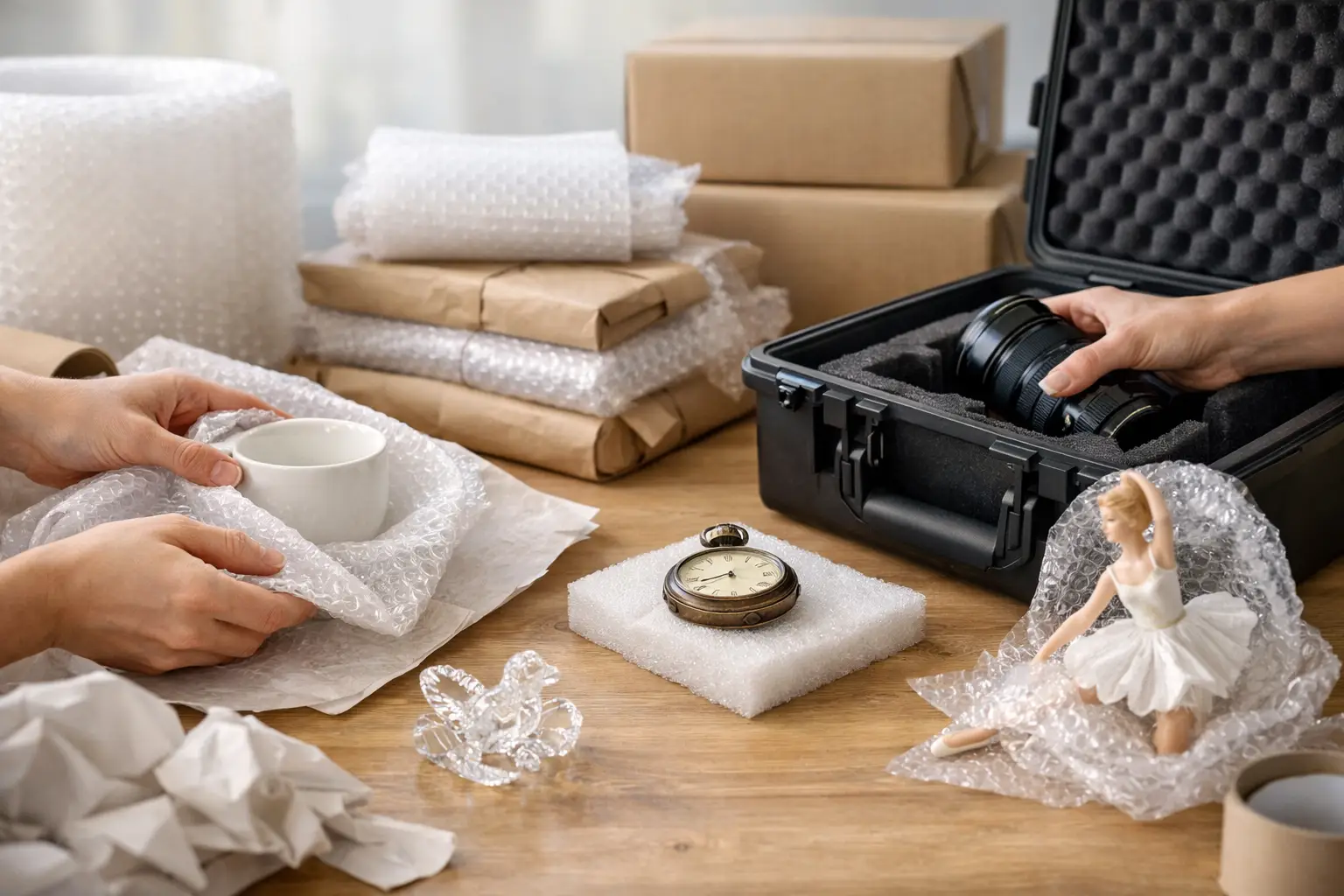
A wine glass that shifts inside a carton can crack before the truck has left the kerb. A framed print can be damaged by one loose corner. When you are already managing keys, cleaners, children, pets and removal day timings, delicate belongings need a clear plan. This guide to packing delicate items will help you protect the things that are hardest to replace and make moving day far less stressful.
The goal is not to use the most packing material possible. It is to stop movement, cushion impacts and ensure every box can be lifted safely. Good packing starts before you wrap a single item.
Start with the right packing materials
Thin supermarket boxes and loosely filled cartons are a risk for fragile belongings. Choose sturdy, clean moving boxes in manageable sizes. Small boxes are usually best for glassware, ceramics, collectibles and other heavy breakables, because a large box can quickly become too heavy to carry safely.
You will also need quality packing paper, bubble wrap, strong tape, scissors or a tape dispenser, labels and a marker. Use clean butchers’ paper or purpose-made packing paper rather than newspaper where possible. Newspaper ink can transfer onto light-coloured ceramics, fabric and unsealed surfaces.
For particular items, use specialist protection. Picture cartons protect framed artwork and mirrors. Dish-pack boxes provide extra wall strength for crockery. Foam corners are useful for frames, while furniture blankets and stretch wrap protect larger fragile pieces. The extra material is worthwhile when replacing the item would be expensive or impossible.
Avoid relying on towels, doonas or clothing as your only protection. They can add useful padding around a well-wrapped item, but they do not prevent pieces from knocking together inside a box. Save them for filling small gaps or cushioning sturdy objects.
Guide to packing delicate items room by room
Packing by room keeps the process organised, but fragile items need to be packed by material and shape as well. Plates stack differently from wine glasses, and framed artwork should never share a box with heavy kitchenware. Label each carton with both the room and the contents, such as “Kitchen – glassware – fragile – this side up”.
Do not overfill a box just because there is room left. The safest carton is full enough that items cannot move, while still light enough for a person to lift with control. As a practical rule, place heavier fragile items at the bottom and lighter ones on top, with padding between every layer.
Glasses, cups and bottles
Wrap each glass individually with packing paper. Start at one corner of the paper, tuck it into the opening, then roll the glass diagonally while folding the paper around it. Pay extra attention to stems, handles and rims, as these are the first parts to break.
Place wrapped glasses upright in a sturdy carton, ideally with cardboard dividers. If you do not have dividers, build a firm base with scrunched paper and pack the glasses close together without forcing them. Fill every gap with packing paper so nothing rattles when you gently move the box.
For bottles, make sure caps are secure and consider placing each bottle in a sealable bag before wrapping it. This will not stop a breakage, but it can contain a leak. Open bottles and liquids are best transported separately where practical.
Plates, bowls and serving ware
Plates should be packed on their edge, not flat in a stack. A vertical position distributes pressure better during transport. Wrap each plate individually, then group several wrapped plates together with another sheet of paper around the bundle.
Create a thick cushion at the base of the box and place the plate bundles upright. Add paper between rows and over the top before sealing the carton. Bowls can be nested only when each one is wrapped separately, with extra cushioning around the rim.
Large platters, serving dishes and glass baking trays need their own attention. Wrap them generously, stand them on edge and avoid placing dense or heavy items against them. If a platter is particularly valuable, use a smaller, dedicated carton rather than trying to fit it into a mixed kitchen box.
Mirrors, artwork and framed photos
Protect the glass face first. Apply painter’s tape in a large X across the surface if appropriate, especially on larger mirrors. This does not prevent damage, but it can help hold pieces together if the glass breaks. Do not apply tape directly to delicate artwork, antique frames or surfaces that may be marked.
Cover the face with cardboard, then wrap the entire frame in bubble wrap or a furniture blanket. Corner protectors are particularly useful because corners take most of the impact when items are moved through doorways, stairs and tight hallways.
Keep framed items upright during storage and transport. Never lay heavy boxes on top of them, and never place a mirror flat beneath other belongings. Clearly mark the carton or protective wrap as fragile and identify which side must remain upright.
Lamps, electronics and small valuables
Remove lamp shades and bulbs before packing. Shades are easily crushed, so pack them in a separate box with plenty of light paper around them. Wrap lamp bases individually, secure loose cords and avoid placing anything heavy on top.
For electronics, use original packaging if you still have it. Otherwise, wrap screens in soft protective material, place cardboard over the screen face and use a snug box with no empty space. Take photos of cable connections before unplugging devices. It saves time when setting up your new home or office.
Jewellery, documents, passports, small collectibles and sentimental items are usually safer travelling with you. Keep them in a clearly organised bag or container that stays in your possession, rather than putting them on the removal truck.
Seal, label and prepare boxes for loading
A fragile box is only as good as its base. Use the H-tape method: run tape along the centre seam underneath the box, then across both edge seams to form an H. Repeat on the top once it is packed. If the carton is carrying dense crockery or books, reinforce the base with an extra strip of tape.
Before sealing, gently test the carton. You should not hear glass clinking or feel contents shifting. If you do, open it and add more paper. This quick check can prevent a damaged box from travelling hundreds of kilometres interstate.
Write “Fragile” on more than one side, but do not assume the label alone will protect the contents. Include a simple description and the destination room. For example, “Dining room – crystal glasses – fragile” gives movers useful information when unloading and helps you prioritise unpacking.
During loading, fragile cartons should be placed on a flat, stable surface and secured so they cannot slide. They should not sit beneath furniture, appliances or heavy cartons. It is also wise to keep artwork, mirrors and tall lamps separate from general box stacks until they can be positioned safely in the vehicle.
Know when professional packing is the safer choice
Packing delicate items yourself can work well when you have time, suitable materials and a manageable number of belongings. It becomes more difficult when you are preparing a large family move, working to a tight settlement date, relocating interstate or handling antiques, large mirrors and valuable collections.
Professional packers bring the right cartons, protective materials and handling techniques, then coordinate packing with loading and transport. This reduces the chance of boxes being packed inconsistently or left until the final night before the move. At XXXperience Removals, a complete packing service can be arranged alongside removal, furniture assembly and cleaning support, so there are fewer moving parts for you to manage.
Pack your most delicate possessions early, give each item enough protection and leave no empty space inside a carton. A calm, organised start is one of the simplest ways to arrive at your new place with the things that matter still intact.