
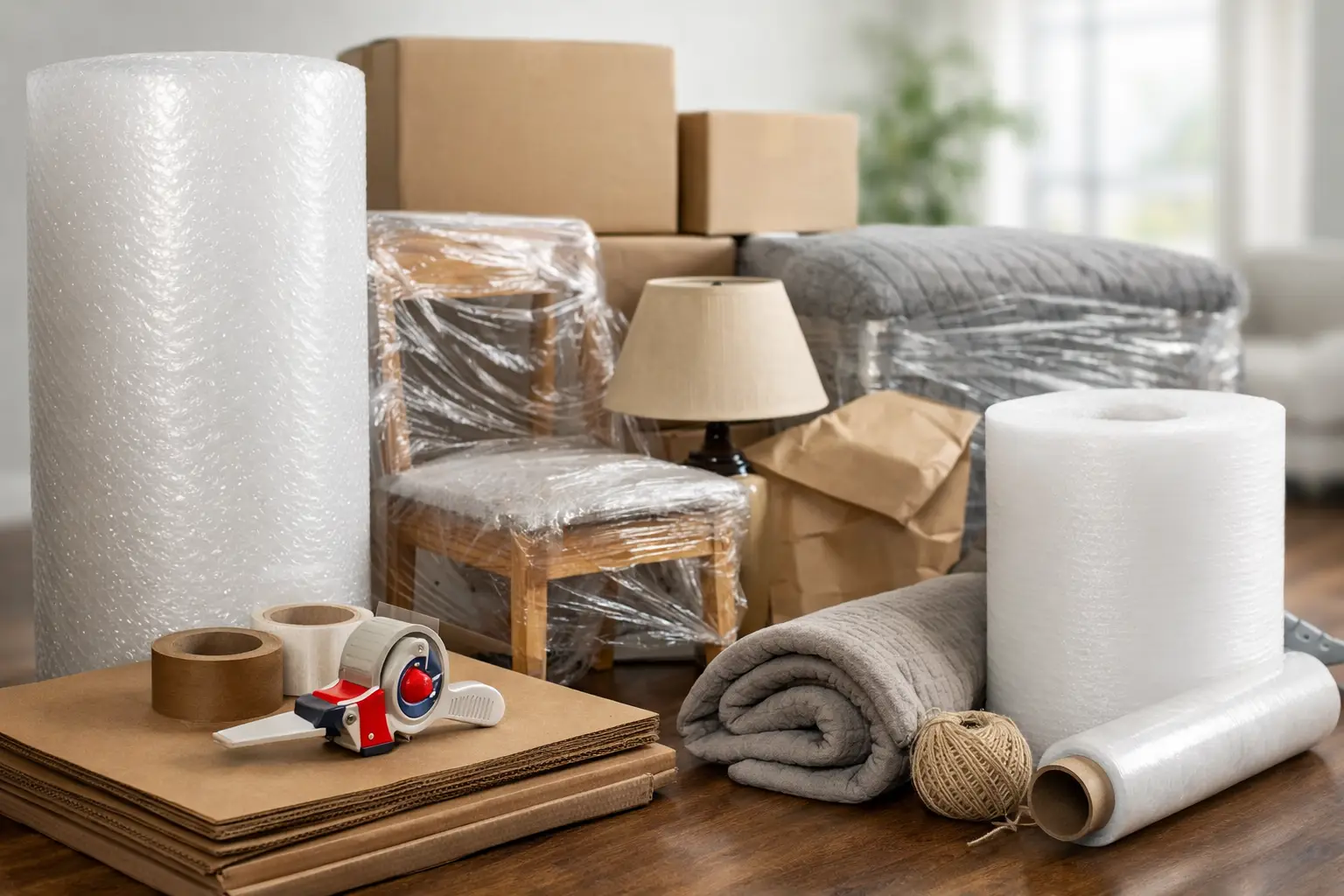
A timber dining table can pick up a deep scratch in the short walk from your kitchen to the truck. A fabric sofa can absorb dust or moisture in storage. And a glass cabinet door can crack when a heavy box shifts beside it. The best packing materials for furniture do more than make items look wrapped – they create the protection needed for lifting, loading, transport and unloading.
For a move across Sydney or an interstate relocation, every furniture piece needs a slightly different approach. The goal is simple: protect surfaces, stabilise moving parts and prevent items from rubbing, shifting or carrying too much weight. Choosing the right materials before moving day saves time, reduces risk and makes unpacking far easier.
Best packing materials for furniture
There is no single material that protects every piece of furniture. A quality move uses layers, with a soft material against delicate surfaces and a stronger outer layer where needed. This protects furniture without trapping moisture or leaving marks behind.
Moving blankets and furniture pads
Moving blankets are one of the most useful materials for solid furniture. They provide a thick cushioned layer around timber tables, buffets, wardrobes, bed frames and appliances. They are especially effective for preventing impact damage while items are being carried through doorways, down stairs or loaded into the truck.
Place the blanket flat against the furniture, fold it around corners and secure it with tape or moving straps. Avoid applying tape directly to polished timber, leather or painted surfaces. Adhesive can lift finishes or leave residue, particularly in warm weather.
Furniture pads are reusable and give better protection than thin household blankets. A standard blanket from home can help in a pinch, but it may slide, shed fibres or offer little protection around sharp corners. For valuable, oversized or awkward pieces, purpose-made moving blankets are the safer option.
Bubble wrap for fragile edges and components
Bubble wrap is ideal for furniture with fragile elements, including glass shelves, mirrors, marble tops, delicate carvings and exposed corners. Large-bubble wrap provides more cushioning against bumps, while small-bubble wrap is useful for individual handles, drawer pulls and smaller fittings.
Wrap glass components separately rather than leaving them inside a cabinet. Corners and edges need extra layers, as these are the areas most likely to take a knock. Once wrapped, label the item clearly and keep it upright during transport where possible.
Bubble wrap is not the best choice for wrapping an entire couch, wardrobe or dining table. It can use a lot of material without adding much structural protection, and plastic directly against some surfaces for an extended period may hold condensation. Use it selectively, beneath a padded blanket or cardboard layer where needed.
Stretch wrap for keeping furniture secure
Stretch wrap is the clear plastic film commonly used to hold drawers, doors and protective blankets in place. It is highly practical for chests of drawers, filing cabinets and bedside tables because it stops drawers opening during lifting. It can also secure removable cushions, protect upholstered furniture from dirt and keep a blanket wrapped tightly around a table.
The key is to use it as an outer securing layer, not as the only protection for timber or delicate finishes. Put a furniture pad, clean sheet or paper layer between the stretch wrap and the surface if the item is likely to sit wrapped for more than a short period.
Do not rely on stretch wrap to make a heavy item easier to carry. It keeps pieces together, but it does not reduce weight. Empty drawers when they contain books, tools or dense household items. This makes furniture safer to move and reduces strain on drawer runners.
Corrugated cardboard and corner protectors
Cardboard is a simple, effective barrier for flat surfaces and vulnerable edges. Large flat sheets work well on table tops, desk surfaces, glass panels and framed artwork. Cardboard corner protectors are particularly valuable for timber furniture, mirrors and cabinets, where one hard knock can cause a chip or dent.
For a dining table, remove the legs if practical, wrap each leg in a moving blanket, then cover the tabletop with cardboard and a padded outer layer. This creates a firm shield without placing tape on the finish. Keep screws, bolts and small fittings in a labelled bag, then tape that bag to the underside of the table or store it in an essentials box.
Use clean, dry cardboard only. Damp or recycled cardboard with staples, dirt or grease can transfer marks to furniture. If you are moving during wet weather, add a waterproof outer cover for the trip between the property and the truck.
Packing paper for surfaces and small pieces
Clean butcher’s paper or plain packing paper is useful for protecting smaller furniture components. Use it to wrap handles, removable shelves, lamp bases, hardware and ornaments that are travelling inside drawers or cabinets. It also works as a soft first layer around polished timber when you do not want plastic directly on the surface.
Avoid newspaper for light-coloured upholstery, painted furniture and pale timber. Ink can rub off, particularly if the material gets damp. Packing paper is cleaner and gives you one less thing to worry about when unpacking.
Mattress and sofa covers
Mattress bags and sofa covers protect bulky upholstered items from dust, rain, marks and contact with dirty truck floors. They are useful for mattresses, modular lounges, armchairs and fabric bedheads. A fitted cover is easier to handle than loose plastic sheeting, which can slip while carrying an item.
For leather furniture, avoid wrapping it tightly in plastic for long periods, especially in humid conditions. Leather needs to breathe. Use a clean furniture blanket as the first layer, then add a cover for short-term protection during transport. If the item is going into storage, ask for advice based on the storage conditions and duration.
Match the material to the furniture
A few minutes spent assessing each item makes packing more efficient. Timber furniture benefits from padded blankets, cardboard corners and careful securing. Upholstered furniture needs covers that protect against dust and moisture without unnecessarily trapping humidity. Glass, mirrors and stone require bubble wrap, edge protection and an upright position.
Flat-pack furniture can be more fragile once assembled than it appears. Particleboard panels, for example, can chip at edges or loosen at joints if they are dragged or lifted by one side. If a large flat-pack wardrobe is unstable, dismantling it may be the safer choice. Label every panel and fitting clearly so reassembly is straightforward at the new address.
Antique, sentimental or high-value furniture deserves a tailored packing plan. Veneers, ornate details and aged finishes can be damaged by pressure, tape or unsuitable wrapping. Let your removalist know about these pieces before moving day so the right materials and handling approach can be organised.
Materials that can cause problems
Not every wrapping method is a good one. Tape applied directly to furniture is one of the most common causes of avoidable damage. So is placing heavy boxes on soft lounges, mattresses or delicate tabletops just because there is available space in the truck.
Thin rubbish bags are another poor substitute for furniture covers. They tear easily and offer almost no cushioning. Towels and doonas can help protect small items, but they should be clean, dry and secured properly. Loose fabric can catch on door handles, drag across the ground or shift while the truck is in motion.
It is also tempting to leave drawers full to save packing boxes. This works only for light, non-breakable items such as clothes or linen. Heavy or fragile contents make furniture harder to carry and can damage the drawers from the inside.
Packing furniture for a safer move
Start by measuring large pieces and checking the path from each room to the truck. Remove legs, shelves, glass panels and loose cushions where possible. Photograph complicated furniture before dismantling it, particularly bed frames, desks and modular units.
Wrap each piece according to its material, then label any parts that need special attention. Keep hardware together and make sure wrapped items are secured before they are lifted. The loading order matters too: heavy, stable furniture goes in first, while fragile items are kept upright and protected from movement.
For busy households and offices, professional packing can remove a major part of the pressure. XXXperience Removals can supply protective materials, pack furniture carefully and manage dismantling, transport and reassembly as part of a complete move. It means fewer last-minute trips for tape and boxes, and more confidence that your furniture is ready for the journey.
The right packing materials protect more than furniture. They protect the time, money and peace of mind you have invested in your move. If a piece is difficult to wrap, too heavy to lift safely or too valuable to risk, arrange experienced help before moving day.