
The keys are due back, the removal truck is booked and there are still marks on the walls, crumbs in the pantry and dust behind the fridge. Cleaning before moving out is one of the most time-sensitive parts of any move – and leaving it until the final afternoon can put your bond, schedule and energy under real pressure.
A proper final clean is not about making a home look perfect for photographs. It is about returning the property in a condition that meets the expectations set out in your lease, while giving yourself one less problem to manage after moving day. With a clear plan, the right timing and help where it counts, it does not need to take over the entire move.
Why a final clean deserves a place in your moving plan
When you move out of a rental, the condition report from the start of your tenancy is usually the reference point. General wear and tear is different from built-up grime, stains, rubbish or damage. A clean property makes the final inspection simpler and helps prevent avoidable disputes over the bond.
For homeowners, cleaning still matters. Buyers expect the home to be empty, presentable and ready to occupy. A clean handover is a professional courtesy, especially when settlement dates are tight and another family is preparing to move in.
The challenge is that cleaning is easiest once furniture, boxes and appliances have been removed. That also makes it tempting to leave everything until the end. The better approach is to clean in stages, then reserve a focused final session for the empty property.
Start cleaning before moving out, not after the truck leaves
Begin with rooms and storage areas you use least. Spare bedrooms, linen cupboards, bookcases, garage shelves and the top of wardrobes can be cleaned as soon as their contents are packed. This spreads the workload across several days and gives you a chance to notice stains, scuffs or maintenance issues early.
As packing progresses, wipe down items before they go into cartons. Clean kitchenware, dry bathroom products and dust-free shelves make unpacking at the new address far more pleasant. It also prevents old dirt and moisture travelling with your belongings.
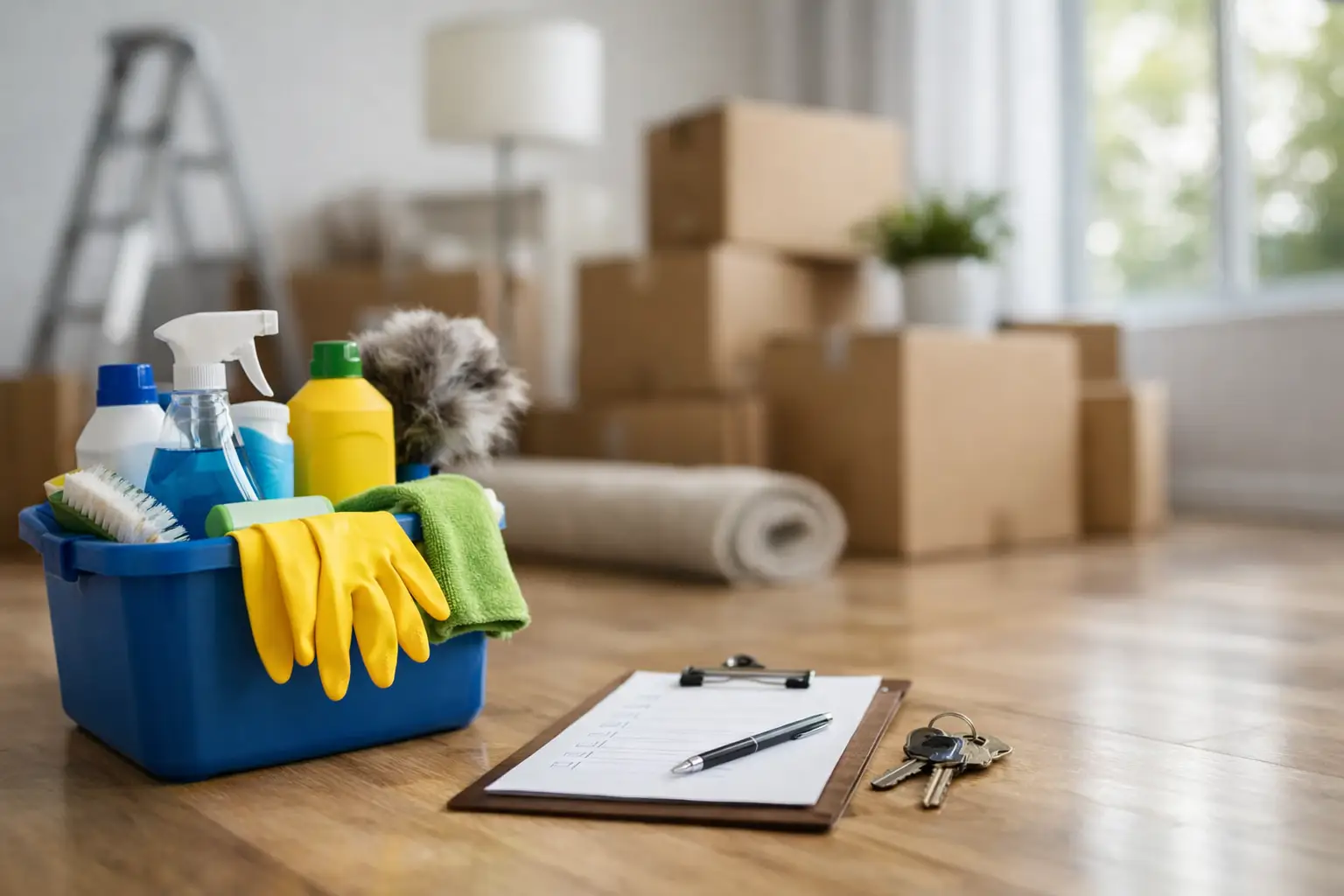
Keep one small cleaning kit aside rather than packing every supply. It should include cloths, a multipurpose cleaner, glass cleaner, disinfectant, a non-abrasive scrubber, gloves, rubbish bags, a mop and bucket, and a vacuum. Label it clearly and take it in your car or keep it until the removalists have finished loading.
Work from top to bottom and room by room
Once the house is empty, cleaning becomes a practical sequence. Start high and finish low. Dusting ceiling fans, vents, blinds and skirting boards before vacuuming or mopping stops you from doing the same job twice.
Kitchen: focus on grease and hidden areas
The kitchen often takes longer than expected because grease settles in places that are easy to overlook. Empty every cupboard and drawer, remove crumbs, wipe internal surfaces and clean handles. Pay attention to the rangehood filters, splashback, stovetop and oven.
The oven is often the point of greatest scrutiny at a rental inspection. If it has heavy baked-on residue, allow enough time for an appropriate oven cleaner to work and follow the product instructions carefully. Do not use harsh tools on delicate surfaces, as scratching an appliance can create a bigger issue than the original grime.
Pull the fridge forward if it is safe to do so and clean the floor, wall and sides behind it. Defrost it in advance if it is coming with you. If it is staying, empty it completely and wipe the seals, shelves and drawers.
Bathroom and laundry: remove residue, not just clutter
Bathrooms can look clean while still showing soap scum, mineral deposits and mould around silicone seals. Clean the shower screen, tiles, taps, bath, toilet, vanity and mirror, then inspect them in daylight. A streak-free mirror and clear shower screen make a noticeable difference.
In the laundry, wipe the sink, taps and cupboards. Check the washing machine area for lint, detergent spills and loose items. If a machine is being moved, ensure it is disconnected and drained according to its requirements before the removal team arrives.
Mould is not always a simple cleaning job. Small surface marks may respond to suitable cleaning products and ventilation, but recurring or extensive mould can point to a property issue. Photograph it, report it to the agent or landlord and avoid making aggressive repairs without agreement.
Living areas and bedrooms: check the details
Empty rooms reveal what furniture hides. Look behind doors, under window sills, inside built-in wardrobes and around power points. Dust light fittings only when they are switched off and cool, and use a stable step stool rather than standing on furniture.
Walls need a careful approach. A soft cloth can remove light marks, but over-scrubbing may lift paint or leave a shiny patch. If there are picture hooks, adhesive strips or significant marks, check your lease and speak with the property manager before patching or painting. A quick fix that does not match the existing finish can be more obvious than the original mark.
Finish each room with floors. Vacuum edges and corners thoroughly, then mop hard flooring with a product suitable for its surface. For carpet stains, treat them early and test products in an inconspicuous spot. Professional carpet cleaning may be required under some agreements, particularly where pets have lived in the property, but the requirement depends on your lease and local tenancy rules.
Do not forget outdoor spaces and rubbish
Balconies, courtyards, garages and storage cages are part of the handover. Sweep leaves and dirt, remove personal items and take all rubbish with you. Check bins too. Leaving a bin full on collection day may seem minor, but odour and pests can quickly turn it into an inspection issue.
If you have a garden responsibility under your agreement, mow, weed and tidy it to a reasonable standard. Do not take on major pruning, tree work or repairs unless you are responsible for them. This is one area where “it depends” matters: the original condition report and tenancy agreement should guide what is expected.
Make the final inspection easier
Before handing back the keys, walk through the property slowly with your mobile and the original entry report, if you have it. Open every cupboard, check each room from different angles and take clear photos once the property is empty and clean. These photos provide a useful record of the condition on your final day.
Keep receipts for any professional work, including carpet cleaning, pest treatment or end-of-lease cleaning if required. If the agent identifies an issue, ask for specific details and an opportunity to address it where practical. Clear communication is usually faster and less stressful than guessing what they mean.
When professional cleaning is the practical choice
A DIY clean can suit a small, well-maintained unit when you have time after the move. It may be less realistic for a large family home, a tight settlement deadline, heavy kitchen grease, carpet staining or an interstate relocation. In those cases, booking a professional cleaner can protect your time and reduce the risk of rushing the last details.
The same applies when you are coordinating packing, children, pets, building access and removal times. A full-service move can separate the jobs that need your attention from the jobs a trained team can manage. XXXperience Removals can coordinate packing, transport and cleaning support so your move is organised from the first box to the final handover.
Leave enough time for the clean to be completed before keys are due, not after. A calm final walk-through, an empty home and a clean set of keys ready to return is a far better way to close one chapter and start the next.