
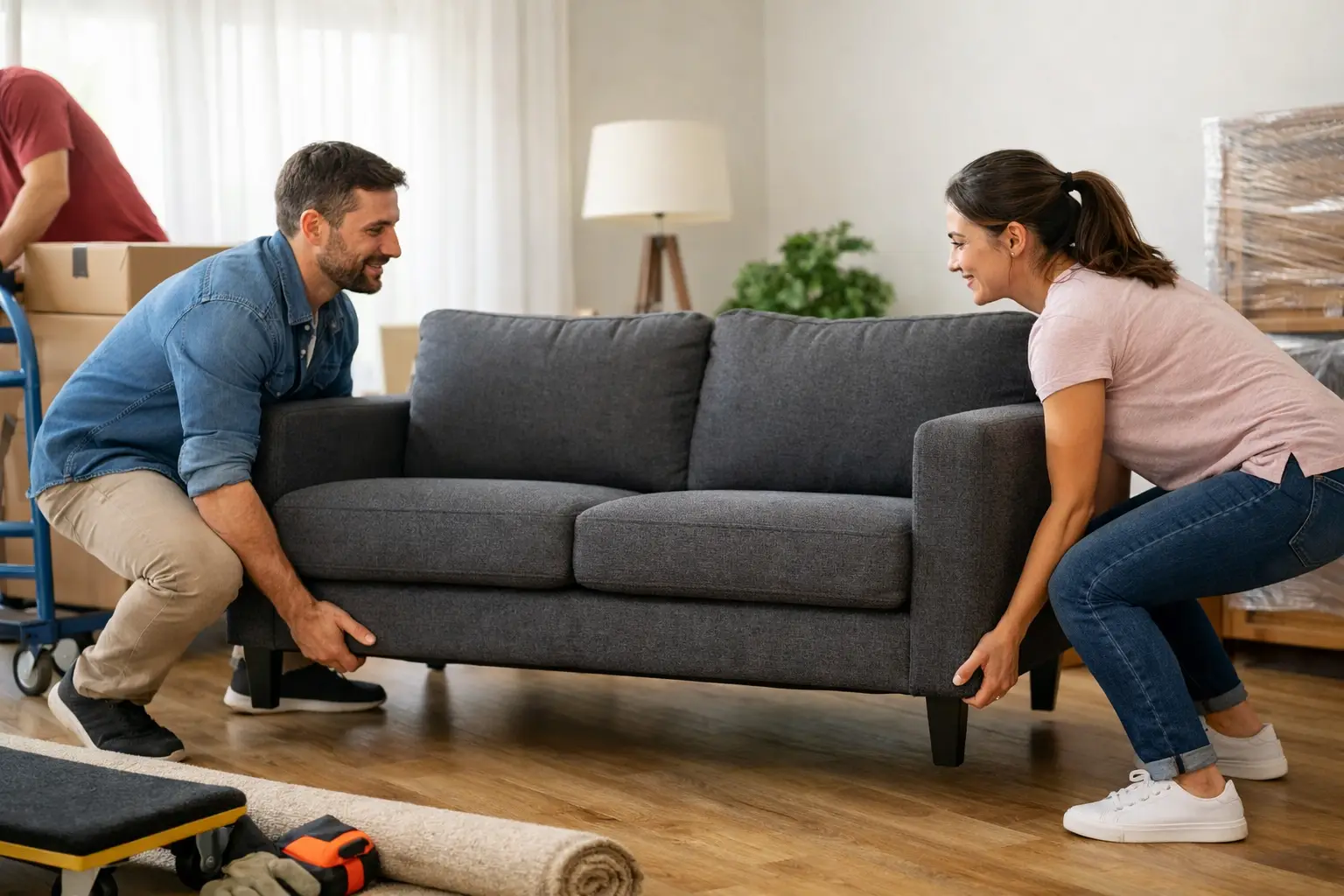
A guide to moving heavy furniture starts with one rule: do not try to prove how strong you are on moving day. A sofa that feels manageable for the first few metres can become dangerous at a tight hallway turn, on a stair landing or while loading a vehicle. Good preparation protects your back, your furniture and the home you are leaving.
Heavy items are also often the most valuable and awkward pieces in a move. Fridges, solid timber dining tables, wardrobes, bed frames, washing machines and large lounges need more than effort. They need clear access, the right equipment and a plan that everyone involved understands.
Plan the route before you lift
Before moving anything, walk the full route from its current position to the vehicle. Measure the furniture at its widest points, then check doorways, hallways, lifts, stairwells and gates. Do not rely on a quick visual estimate. A few centimetres can decide whether a piece passes through cleanly or gets stuck halfway through a doorway.
Look for obstacles that can slow the move down: rugs that may slide, low light fittings, narrow corners, loose pavers, wet paths and parked cars. In apartment buildings, confirm lift access and booking times with strata or building management. If there is a loading dock, find out where the removal vehicle can wait and whether a lift has height or weight limits.
It is worth planning the order of removal too. Clear lighter boxes, lamps and small furniture first, so the route is open for the larger pieces. Keep children, pets and anyone not helping away from the working area. Moving heavy furniture needs space and focus, particularly around stairs and driveways.
Prepare furniture and your home
Preparing an item properly can turn a difficult job into a manageable one. Empty drawers, cupboards and shelves before moving a chest of drawers, entertainment unit or wardrobe. Even if the drawers are secured, their contents add weight and can shift during transport.
Where possible, dismantle bulky furniture before the move. Remove table legs, bed heads, shelves, detachable cushions and glass panels. Keep screws, bolts and fittings together in labelled bags, then tape the bag to the main furniture frame or place it in a clearly marked essentials box. Taking a few photos before dismantling makes assembly much easier at the new address.
Protect both the item and the property. Furniture blankets, padded covers, stretch wrap and corner protectors help prevent scratches, dents and torn fabric. Cover timber floors and protect door frames where a tight fit is expected. Avoid wrapping polished timber directly in plastic for long periods if moisture or heat is likely, as this can affect the finish.
Fridges and freezers need extra planning. Empty and defrost them well before moving day, dry the interior and secure the doors. They should be kept upright during transport where possible. Washing machines also need to be drained, disconnected safely and secured for travel according to the manufacturer’s instructions.
Use the right equipment for heavy furniture
The right gear reduces strain and gives you more control. A furniture trolley or hand truck is useful for upright pieces and appliances, while a flat furniture dolly suits large, stable items such as cabinets and boxed furniture. Ratchet straps can secure furniture inside the vehicle, but they should not be used as a substitute for careful lifting technique.
Furniture sliders can help move a heavy lounge or cabinet across suitable hard flooring without dragging it. They are not a solution for every surface, and they can become unstable on uneven floors or thresholds. Lifting straps may help experienced movers share the load, but only when there is enough room to move safely and everyone knows how to use them.
You will also need a vehicle with enough internal space and suitable tie-down points. Trying to squeeze a large wardrobe into a ute or small van can lead to damaged furniture, an unsafe load or multiple unnecessary trips. For bigger household moves, a purpose-sized removal truck gives your furniture room to be wrapped, loaded and secured correctly.
Lift with control, not speed
When lifting is necessary, get close to the item and keep your feet shoulder-width apart. Bend through your knees and hips, keep your back straight and hold the load close to your body. Lift smoothly using your legs. Do not twist while carrying weight. Instead, move your feet to turn your whole body.
With two or more people, agree on the route, hand positions and commands before the item leaves the floor. One person should call the movement, particularly when negotiating steps, doors or tight corners. Use simple cues such as “lift”, “stop”, “down” and “clear”. If someone loses their grip or feels pain, put the item down safely. Do not attempt to save a falling piece of furniture.
A common mistake is lifting a piece that should be tilted, slid or dismantled. Another is holding an item by removable handles, decorative trims or weak panels. Use solid structural points instead. For drawers, wardrobes and cabinets, this usually means the underside or main frame, not the doors or drawer fronts.
Stairs, tight spaces and awkward items
Stairs add risk quickly. Keep the heavier end of the item with the person walking downhill, move one step at a time and keep communication constant. Never rush because you are blocking a staircase or because the vehicle is waiting. A damaged wall can be repaired, but a serious injury can disrupt far more than a move.
Large lounges and mattresses often need to be manoeuvred upright and rotated through doorways. Solid timber tables may need their legs removed. Marble, stone, glass and antiques require specialised protection and handling because their weight is not always obvious and damage can be costly.
If an item cannot safely pass through the normal route, do not force it. It may need further dismantling, a different exit point, balcony access or professional equipment. The best option depends on the building, the furniture and the available access. What works in a ground-floor home may not be suitable for a third-floor unit with narrow stairs.
Know when to book professional removalists
DIY can work for a small move with straightforward access and a few manageable items. But the savings disappear quickly if you hire the wrong vehicle, damage a doorway, strain your back or replace a broken dining table. Professional removalists are particularly useful when you have stairs, large appliances, fragile furniture, limited parking, apartment access restrictions or a tight settlement timeline.
A trained team brings the labour, removal equipment, protective materials and vehicle capacity needed to keep the job moving. They can also dismantle and reassemble suitable furniture, pack fragile belongings and organise loading so the heaviest items are secure for the journey. This matters for local Sydney moves and even more for interstate relocations, where furniture will spend longer in transit.
XXXperience Removals can manage the practical work around heavy furniture as part of a complete relocation service, from packing and protection through to transport, assembly and optional cleaning support. It means you are not left trying to move a king bed down a stairwell after a full day of packing.
Set up safely at the new address
The job is not over once the furniture reaches the new property. Before unloading, check the route again and decide exactly where each large piece will go. Place floor protection where needed, especially if trades, cleaners or other movers are still coming through the home.
Unload heavy pieces first if they need to go into rooms at the back of the property, but avoid blocking access for everything else. Assemble beds and essential furniture early so the home is functional on the first night. Keep tools, fittings and instructions together until every item is checked and stable.
A calm move is built on sensible decisions made before the lifting starts. When an item is too heavy, too awkward or too risky for the access available, choosing professional help is not taking the easy way out. It is the practical way to protect what matters and get settled sooner.