
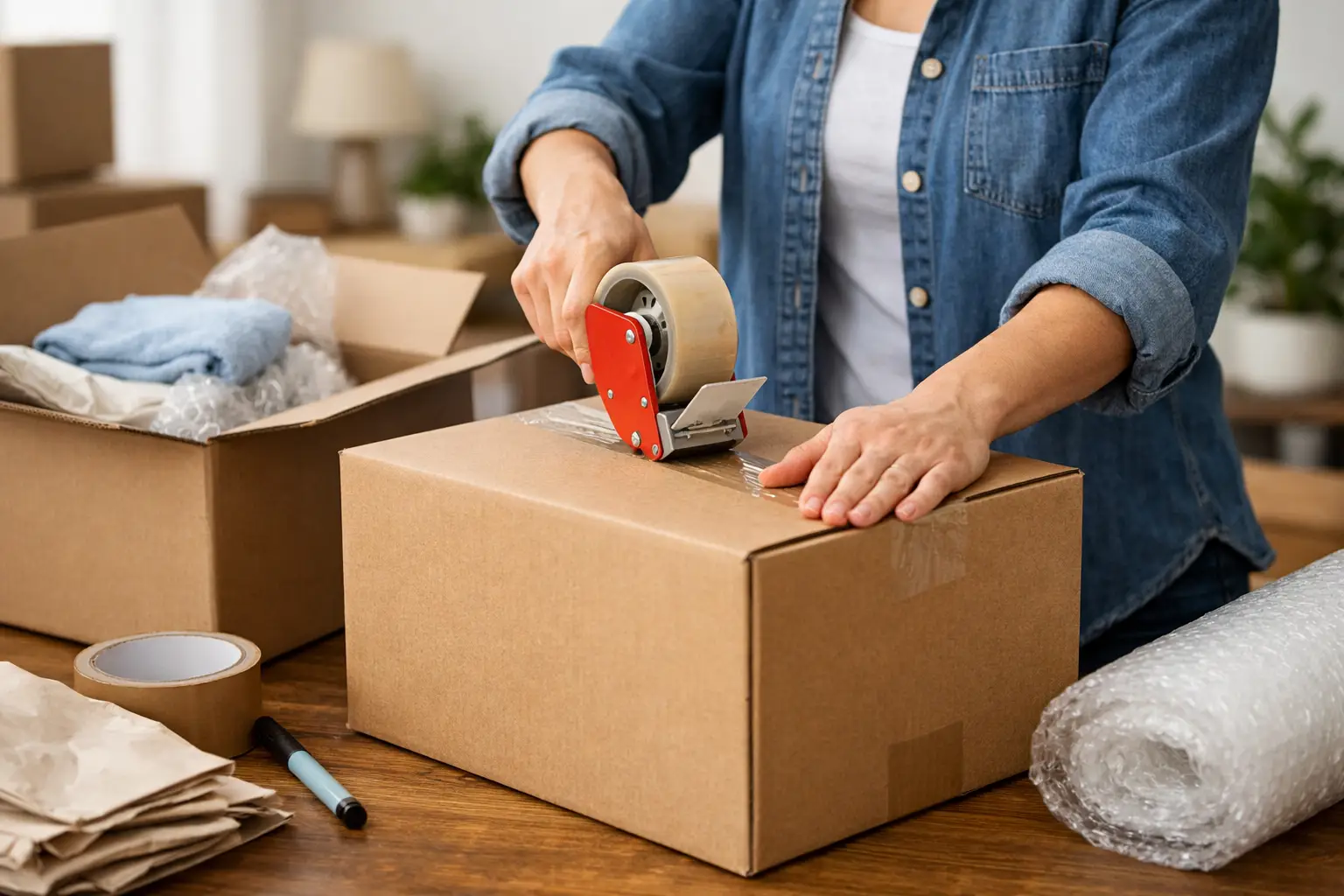
Packing usually starts the same way. A few spare boxes. Good intentions. Then suddenly the kitchen is half wrapped, the books are too heavy to lift, and no one can find the tape. If you are wondering how to pack moving boxes without creating more stress, the good news is that a better system makes a big difference.
The goal is not just to get everything into boxes. It is to protect your belongings, make loading faster, and make unpacking far easier at the other end. Whether you are moving from a city apartment, a family home in Sydney, or a small office, the way you pack affects the whole move.
Why packing properly matters
A rushed packing job often leads to broken items, wasted space, and heavy boxes that are hard to carry safely. It also slows down the move on the day. When boxes are packed properly, they stack better, travel better, and are easier to place in the right rooms.
This matters even more for interstate moves or larger family relocations. The longer your belongings are in transit, the more important it is that each box is stable, labelled, and packed with the right materials. A little more care upfront can save a lot of frustration later.
How to pack moving boxes without the usual chaos
Start with the right supplies. Strong moving boxes in a few practical sizes are better than a random mix collected over weeks. You will also want quality packing tape, butcher paper or packing paper, bubble wrap for fragile items, markers, and labels if you prefer a cleaner system.
Box size matters more than people expect. Small boxes are best for heavy items like books, tools, pantry goods, and files. Medium boxes suit toys, folded clothes, kitchenware, and decor. Large boxes are better for light, bulky things such as linen, pillows, and lampshades. If you put heavy items into large boxes, they become difficult to lift and more likely to split.
Before you fill anything, reinforce the bottom of every box with tape. Use more than one strip across the seam, then tape across it the other way for extra support. It takes seconds and helps prevent the worst kind of moving problem – the box giving way halfway to the truck.
Pack by room, not by convenience
One of the most effective ways to stay organised is to pack one room at a time. It is tempting to fill a box with whatever is nearby, but mixed boxes create confusion later. Keeping each room separate makes unloading more efficient and helps you settle in faster.
Label each box on at least two sides and the top. Include the room name and a short note about the contents. “Kitchen – plates and mugs” is far more useful than just “Kitchen”. If the box contains anything fragile, mark it clearly, but still pack it as if the label might be missed. Labels help, but secure packing is what protects the contents.
There is also value in priority labelling. Some boxes should be unpacked first, such as essentials for the first night, basic cookware, bathroom items, chargers, work gear, or children’s school items. Marking these clearly can make the first 24 hours feel much more manageable.
The best way to pack fragile items
Fragile items need protection inside the box, not just around it. A common mistake is wrapping a plate or glass well, then leaving empty space in the carton. During transport, movement inside the box is what causes damage.
Use paper or bubble wrap to wrap each item individually. Plates are usually safer packed vertically like records rather than stacked flat. Glasses should be wrapped one by one, with extra padding around the base and rim. Bowls can be nested with paper between them. For small appliances, remove loose parts, wrap them separately, and cushion all sides.
Line the bottom of the box with scrunched packing paper before adding contents. Fill gaps as you go. When the box is full, add a final cushioning layer on top before sealing it. If you gently shake the box and feel movement, it needs more fill.
For framed art, mirrors, or delicate decor, standard boxes are not always ideal. These items often need speciality protection or custom handling. That is where professional packing can be worth it, especially for high-value or sentimental pieces.
Heavy items go low and light items go high
A stable box is packed with weight in mind. Put heavier items at the bottom and lighter items on top. This keeps the box balanced and reduces crushing. The same idea applies when loading the moving truck, but it starts with the way the carton is packed.
Books are the classic example. They should go into small boxes only, packed firmly so they do not shift. Kitchen pantry items like jars, tins, and bottles also need compact, reinforced boxes. If liquids are involved, seal lids tightly and pack them upright with protective wrapping around them. It is smart to keep them separate from anything that could be ruined by a leak.
If a box feels too heavy, it probably is. There is no prize for fitting more into one carton. Safer lifting, faster handling, and less breakage matter more.
Clothes, linen and odd-shaped items
Not everything needs the same level of packing. Folded clothes, towels, doonas, and bedding can be packed in larger boxes or moving bags if they are clean and dry. These soft items are also useful for cushioning less fragile belongings, but avoid using anything valuable or prone to staining as protective fill.
Hangers can stay on clothing if you are using wardrobe boxes. If not, group items together, slide a large bag over them, and tie it at the bottom for transport. It is a practical option for short moves.
Awkward items like lamps, cords, gaming consoles, or office equipment should be prepared properly before boxing. Remove bulbs, detach stands, bundle cords neatly, and label accessories so they do not go missing. For office moves, keeping cables, monitors, and devices clearly matched saves a lot of time when setting up again.
Do not overpack or underfill
Both cause problems. An overpacked box can burst, tear, or become unsafe to lift. An underfilled one can collapse when stacked because there is not enough internal support.
A good box is full but not strained. The flaps should close flat without force. Once sealed, it should feel solid and hold its shape. If the top is bulging, remove something. If the sides cave in, add more padding.
This is especially important if boxes will be stacked in storage or loaded tightly for a long-distance move. Strength and shape matter just as much as what is inside.
What not to pack in moving boxes
Some items should be kept with you rather than loaded into standard moving cartons. Important documents, jewellery, medication, passports, wallets, and daily essentials are better in a personal bag or small case that stays close.
Cleaning products, paints, and certain chemicals may also need special handling or should not be packed with general household goods. The same goes for anything perishable. If you are unsure, ask your removalist before moving day rather than guessing.
When professional packing is the smarter option
There is a difference between packing everything yourself and packing everything efficiently. If you are short on time, managing a family move, relocating an office, or dealing with fragile furniture and valuables, professional packing can remove a major part of the pressure.
A trained team knows how to protect breakables, maximise space, and keep the whole move running to schedule. That is often the difference between a stressful week of half-finished packing and a move that feels controlled from start to finish. For many households and businesses, the real value is not just convenience. It is reducing risk and saving time.
At XXXperience Removals, we see every day how much easier a move becomes when boxes are packed properly from the start. Better packing supports better handling, quicker loading, and a smoother arrival at your new place.
A simple packing rhythm that works
If you want to make steady progress, begin with the rooms you use least. Spare rooms, bookshelves, decorative items, and out-of-season clothing are good starting points. Leave everyday essentials until last, and pack a clearly marked box or bag for your first night.
Keep tape, paper, scissors, and markers in one spot so you are not searching for supplies every half hour. Finish and label each box as you go. Half-packed cartons scattered around the house only make the job feel bigger.
Packing does not need to be perfect. It just needs to be thought through. Strong boxes, sensible weight, clear labels, and proper protection will carry you a long way. And if the job starts to feel bigger than expected, getting help early is often the easiest way to keep your move calm, safe, and on track.